Loading Harmony
Harmony
Loading Harmony
Harmony
Harmony
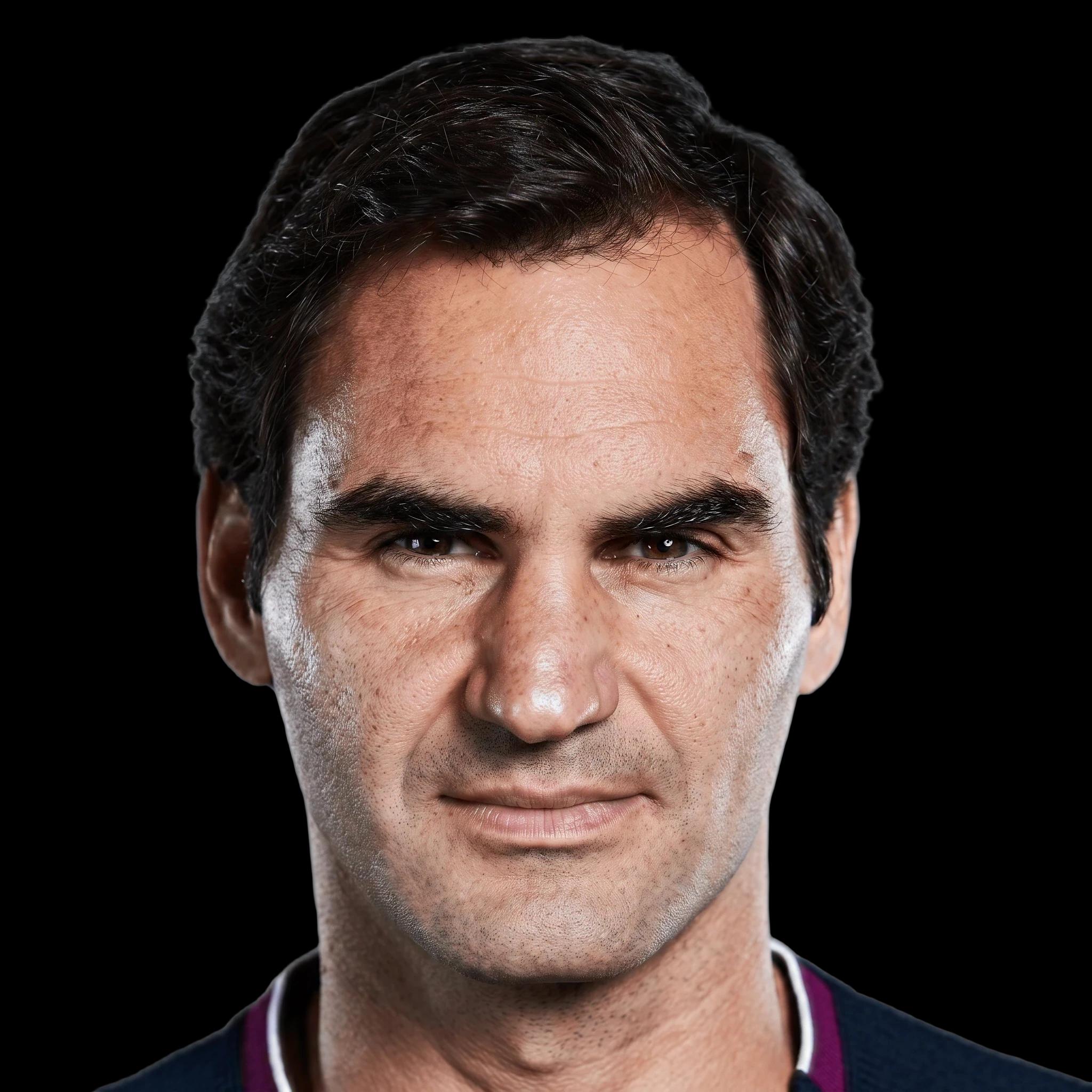
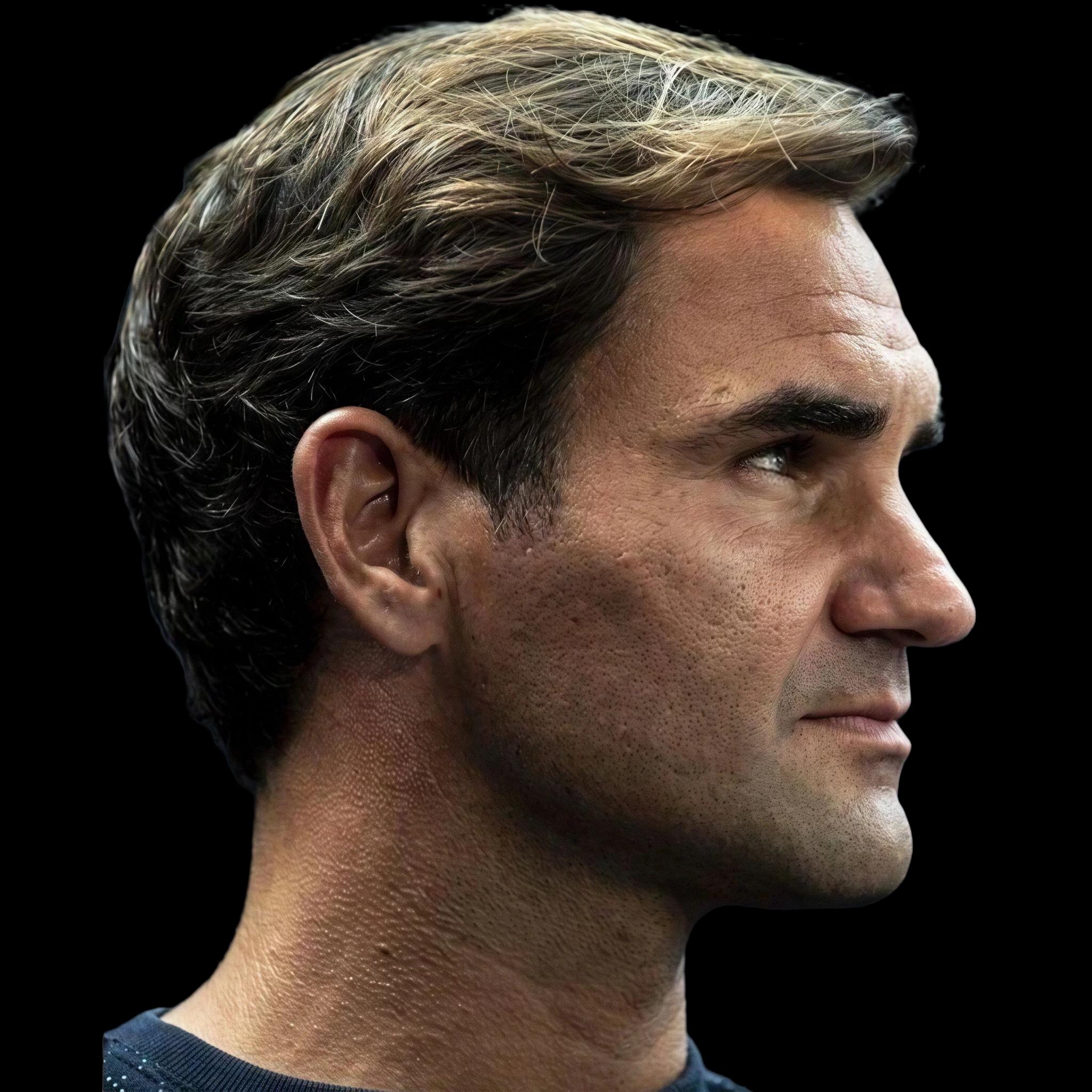
7.0
Great harmony
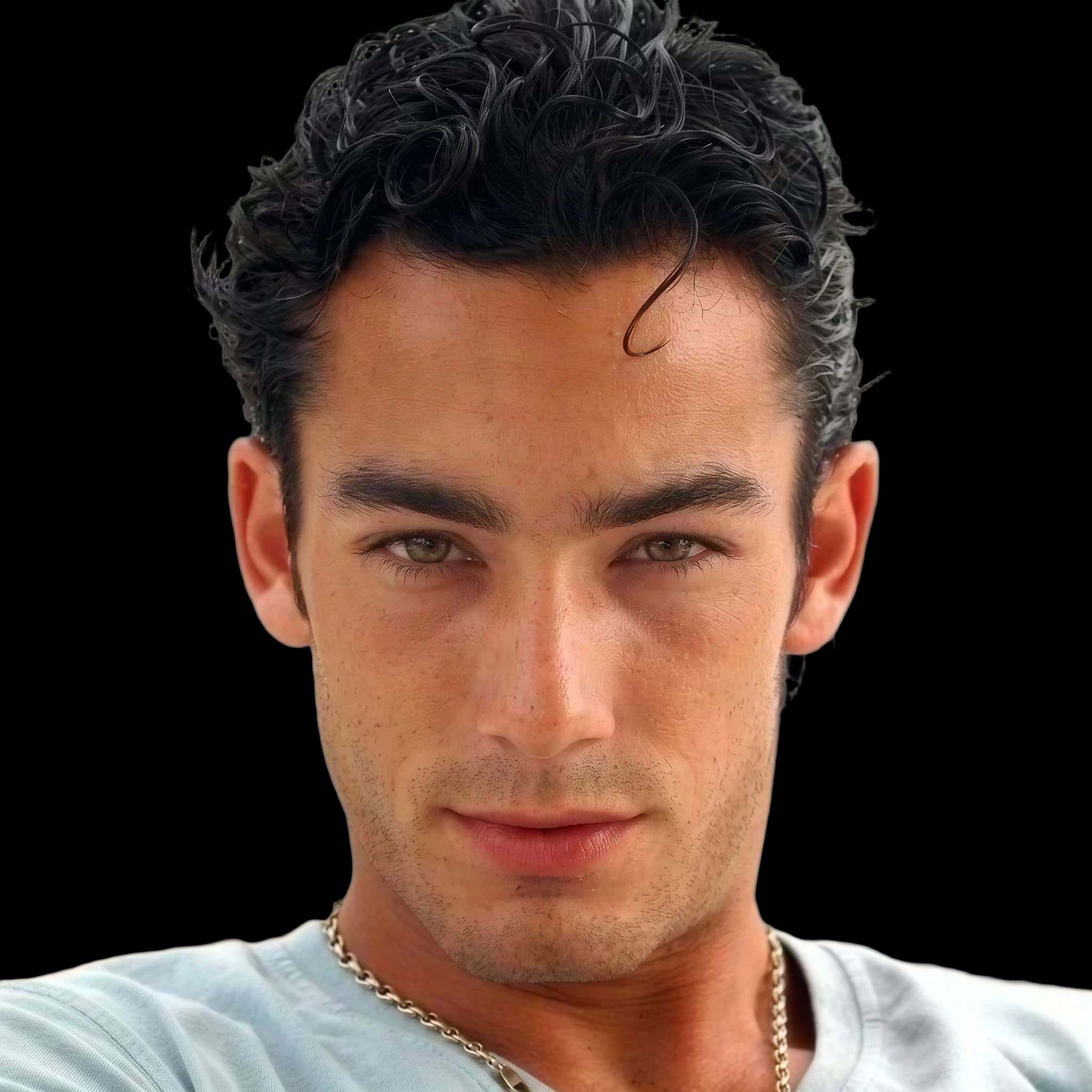
Top 5.6%FaceIQ Labs rates Roger Federer's Harmony at 7.0, 426th of 1155 men on the wiki, in the top 37%. Harmony rates how closely the face's proportions, front and side, fall inside their ideal ranges. His strongest measurements are Anterior Facial Depth and Bigonial width, both at 10.0, and his weakest are Upper Lip S-Line Position at 0.7 and Upper Lip E-Line Position at 0.5. The closest Harmony scores on the wiki belong to Aarón Díaz (7.0), Andy Warhol (7.0) and Chico Lachowski (teen) (7.0). Simon Nessman has the highest, at 9.0.
This contributes to a pleasant jaw contour due to the jaw being neither too wide nor too narrow.
10.0This contributes to a harmonious nasal profile due to the nose bridge being neither too wide nor too narrow.
10.0This contributes to a harmonious face shape due to the face being neither too short nor too long.
10.0This contributes to a harmonious face shape due to the midface and jaw shapes aligning perfectly.
10.0This contributes to a harmonious midface due to the central midface being neither too narrow or broad.
10.0This contributes to a harmonious midface due to the midface having ideal forward projection.
10.0This contributes to a pleasant upper face due to the brow ridge being neither too harsh or soft.
10.0This contributes to a harmonious eye region due to the eyes being neither too round nor too narrow.
10.0This contributes to a harmonious eye region due to the eyebrows being positioned neither too high nor too low.
10.0This contributes to a harmonious lower face due to the neck being neither too wide nor too thin.
10.0This contributes to a harmonious lower face due to the neck having a sharp, angular contour.
10.0This contributes to a harmonious midface due to the area around the eyes having sufficient volume and projection.
10.0This contributes to a harmonious lower face due to the jaw not lacking length or being overly long.
10.0This contributes to a harmonious eye region due to the eyebrows being tilted neither too upward nor too downward.
9.9This contributes to a pleasant jaw contour by indicating the vertical part of the jawbone has ideal length.
9.9This contributes to a harmonious cheek region; the cheekbones are high-set and provide structural support to the midface.
9.8This contributes to a pleasant jaw contour due to the jaw having ideal proportions.
9.8This contributes to a harmonious eye region due to the eyebrows having ideal horizontal length relative to face width.
9.7This contributes to a harmonious midface due to the midface not being overly elongated or shortened.
9.7This contributes to a harmonious midface due to the nose not lacking vertical length or being overly long.
9.7This contributes to a harmonious nasal profile due to the nasal tip being well-defined and proportionate.
9.7This contributes to a balanced frontal profile by indicating that the ears project neither too far from nor too close to the head.
9.6This contributes to a pleasant mouth contour by indicating that the mouth is neither too wide nor too narrow.
9.5This contributes to a harmonious eye region due to the eyes being neither too upturned nor too downturned.
9.5This contributes to a pleasant nose contour due to the nose being neither too wide nor too narrow.
9.4This contributes to a pleasant upper forehead contour by indicating that the upper forehead slopes at an ideal angle.
9.3This contributes to a harmonious midface due to the eyes being proportionate in size relative to facial width.
9.2This contributes to a harmonious midface due to the eyes being neither too close nor too far apart.
8.85 ratios showing strong performance but not fitting into specific categorized strengths.
9.9The chin extends too far forward, unbalancing the facial profile.
12.9%The upper jaw is less forward than ideal, reducing midface projection and facial harmony.
10.7%The jaw grows with a flatter angle, resulting in a short or overly wide lower face. This can indicate malocclusion, such as a deep bite or overbite.
7.9%The face appears flattened or slightly concave, often due to an overprojected chin or recessed maxilla. This can indicate malocclusion, such as an underbite.
7.0%The nose lacks forward projection, appearing flat and less defined in the profile.
6.3%The nose appears too soft and weak, creating an unbalanced nasal profile.
5.0%The chin appears too long relative to the philtrum, OR the philtrum appears too short relative to the chin. Since we measure ratios rather than absolute lengths, these two conditions cannot be distinguished and represent the same proportional imbalance in the lower face.
2.3%The upper jaw is too short, creating an unbalanced lower face proportion.
2.3%The lower jaw is too long, creating a heavy or extended lower face.
2.3%The lower lip lacks fullness, appearing too slim relative to the upper lip.
2.1%The lower lip is too recessed, reducing fullness and profile balance.
2.0%The upper lip is set too far back, creating a flat or thin appearance.
1.9%The upper lip lacks fullness, appearing too slim relative to the lower lip.
1.9%The upper face is too tall, creating an unbalanced forehead proportion.
1.8%The forehead slopes backward excessively, altering upper face proportions.
0.8%The forehead is too slim relative to the face, reducing upper face balance.
0.8%The lips lack a prominent cupid's bow, creating an unbalanced facial appearance.
0.1%4 ratios showing minor proportional variations that contribute to overall harmony score.
3.9%Roger Federer's Harmony score is 7.0 in FaceIQ Labs' analysis, which rates how closely the face's proportions, front and side, fall inside their ideal ranges.
By Harmony score, Roger Federer is ranked 426th of 1155 men on the wiki, in the top 37%.